01
Gross, cradle-to-gate, always
Headline figures are gross. Biogenic uptake appears in its own labelled section as non-permanent, and is never subtracted from the headline.
Marine carbon analytics
Procurement asks for the cradle-to-gate footprint of a seaweed or algae extract. A consultancy quotes €7,000 and six weeks, which is more than the margin on the order.
Bluecarbon models the footprint from your own production parameters. The gross figure is free and on screen. The Report, the one you forward to your buyer, is €390.
Example Run
Category BLaminaria digitata extract, cultivated
Ireland, sea-water drying, road freight 480 km
Gross footprint, cradle-to-gate
0.70kgCO2e/kg
| Scope 1, harvest and fuel | 8.6% |
| Scope 2, drying and extraction | 61.4% |
| Scope 3, transport and packaging | 30.0% |
Largest lever: drying energy, 0.31 kgCO2e/kg of the total, Category B.
Biogenic uptake
0.94 kgCO2e/kg Category C
Reported separately. Non-permanent. Not subtracted.
Illustration of the Calculator output. Not a Report.
Status: in build. The Calculator is not open yet.
The request
“Please send us the cradle-to-gate carbon footprint of this ingredient, per kilogram, with your method.”
| What suppliers do today | Cost | Time | Why it fails |
|---|---|---|---|
| Commission a consultancy LCA | €5,000–10,000 | Months | Costs more than the margin on the order. |
| Ask a generalist LCA platform | Quote only | Weeks | Built on terrestrial databases. Marine coverage is thin. |
| Write a number on a slide | €0 | An hour | Unsubstantiated, and from 27 September 2026 unlawful. |
| Reply that you do not have it | €0 | A minute | The tender goes to a supplier who does. |
The fifth option is the one this company exists to sell.
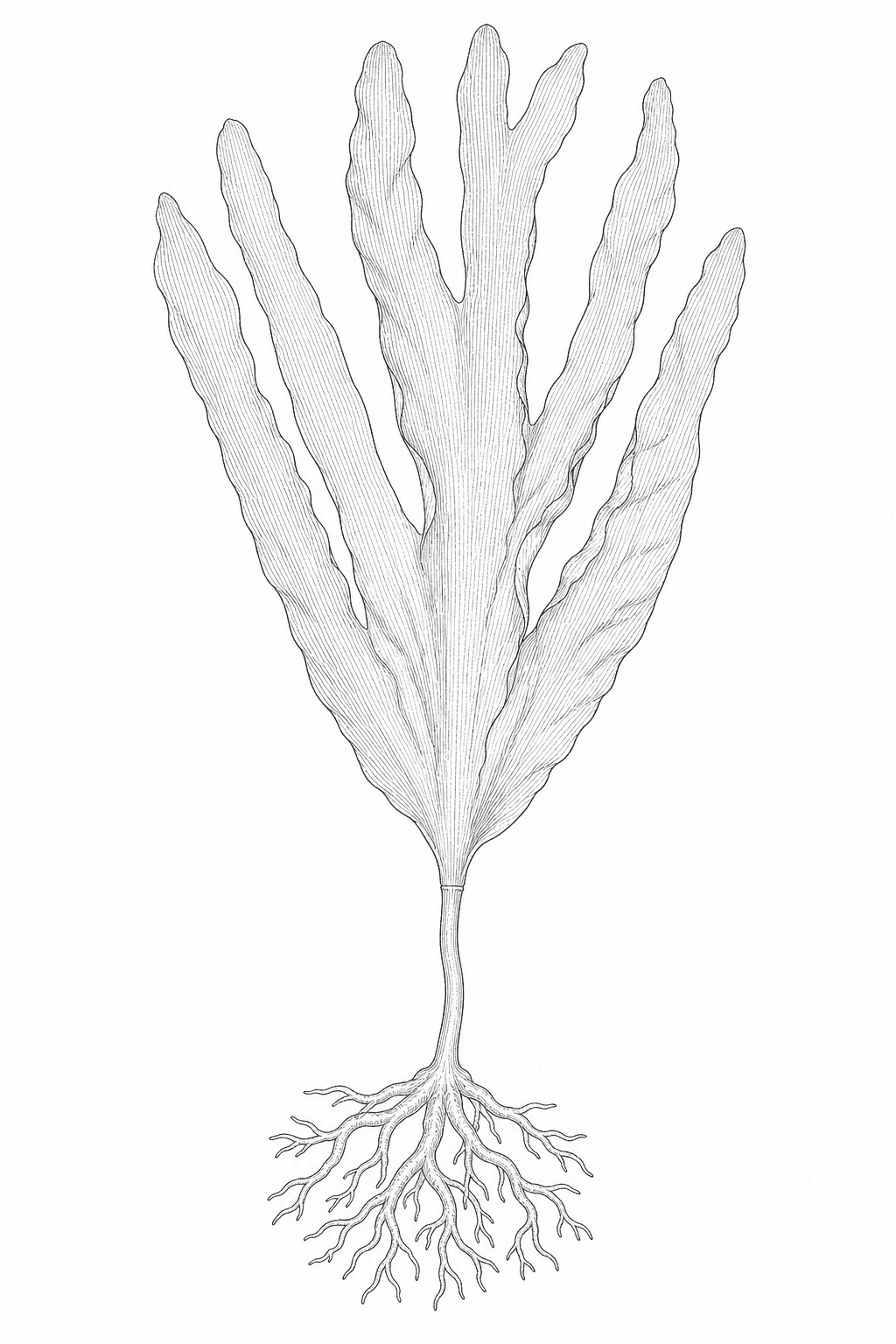
Fig. 1 — Laminaria digitata. Blade, stipe, holdfast. Harvest method and extraction yield set most of the number.
How it works
Pick the species or INCI name. The record carries harvest methods, conservation status and a typical gross footprint range with its Category grade.
Seven production parameters, every one pre-filled with a regional default. Adjust the two or three you know. The number updates as you type.
€390 buys the signed PDF: the Scope 1-2-3 breakdown, line-item inventory, cited factors, peer set, reduction levers and the Category grade.
System boundary
S1
Harvest
wild or cultivated
S2
Drying
grid or fuel
S3
Extraction
yield sets the rest
S4
Packaging
material and ratio
S5
Gate
transport to the gate
Fig. 2 — Cradle to gate. Use, disposal and retail sit outside the boundary.
The seven parameters
The comparison
Marine ingredients outperform land-based equivalents per kilogram, and almost no supplier can prove it. Nothing here is netted or discounted. This is the gross cradle-to-gate figure beside its peer set.
Kelp extract, cultivated
Marine, Category C
0.70
Whey protein
Land-based, Category C
6.40
Pork protein
Land-based, Category C
7.20
Bovine collagen
Land-based, Category C
16.00
0.00
4.00
8.00
12.00
16.00
Representative averages shown for illustration, Category C. A Report names the emission factor, the citation and the confidence grade behind every line of the inventory.
Bovine collagen is 22.9 times
the kelp figure, Category C both.
The discipline
01
Headline figures are gross. Biogenic uptake appears in its own labelled section as non-permanent, and is never subtracted from the headline.
02
03
Those are the phrases that put a brand customer at risk. Leaving them out is what makes a Report forwardable.
Bluecarbon would rather publish 0.70 kgCO2e/kg at Category B than a friendlier figure with a claim attached, and say on the page why.
Prices, printed
Enterprise platforms print “contact sales” where a price should be. Here is the price.
| What you receive | Price | Detail |
|---|---|---|
| Calculator | Free | Ungated. No account, no email and no payment before the number. |
| Single report | €390 | One ingredient, one Run. Print-ready Report, cited factors, Category grade. On sale now. |
| Report pack of 5 | €1,590 | €318 each. Not purchasable yet. Buy single Reports today. |
| Report pack of 20 | €4,900 | €245 each. Not purchasable yet. Buy single Reports today. |
| Primary data upgrade | €1,200 | Category B to Category A. Requested by email after a Report is bought. |
Nothing recurs. You are charged only when you buy a Report.
What happens next
Twelve marine ingredients carry a full factor set today, each with its species record, harvest method and conservation status. Pick one, adjust the parameters you know, and read the gross number. No account, no email, no payment before the number.
Copies this page's address. Nothing is sent.
The Calculator collects nothing. An email address is asked for once, at checkout, because the Report has to arrive somewhere.